Gothic Reptile Terrarium Ideas: How to Build a Dark Fantasy Habitat
A reptile enclosure can be more than a place to keep your pet—it can feel like a tiny world of its own.
If you love gothic interiors, dark fantasy, mysterious architecture, or dramatic terrarium designs, a gothic reptile habitat offers a completely different approach to enclosure styling. Instead of relying only on traditional rocks, branches, and greenery, you can introduce sculptural hideouts, architectural shapes, climbing structures, and darker tones to create a habitat with its own atmosphere.
The key is to balance visual design with the needs of the animal living inside it.
Here are a few ideas for creating a gothic-inspired reptile terrarium without losing sight of function.
1. Start With One Statement Piece
A strong gothic enclosure usually begins with a focal point.
Instead of filling the terrarium with many unrelated decorations, choose one piece that establishes the theme. A sculptural hideout such as a Medusa-inspired sanctuary, gothic crown shelter, coffin-style hide, or miniature gothic building can immediately give the enclosure its identity.
Once the focal point is in place, the rest of the habitat can be built around it.
This also helps prevent the enclosure from feeling overcrowded. One dramatic feature often has more visual impact than several competing decorations.
2. Add Height With Climbing Structures
A visually interesting terrarium should not exist only at ground level.
For species that naturally use elevated surfaces and when appropriate for their husbandry needs, climbing structures can add vertical dimension to the enclosure.
Dark sculptural pieces such as gothic trees, arches, bridges, or fantasy-inspired climbing stands can create different levels while reinforcing the overall theme.
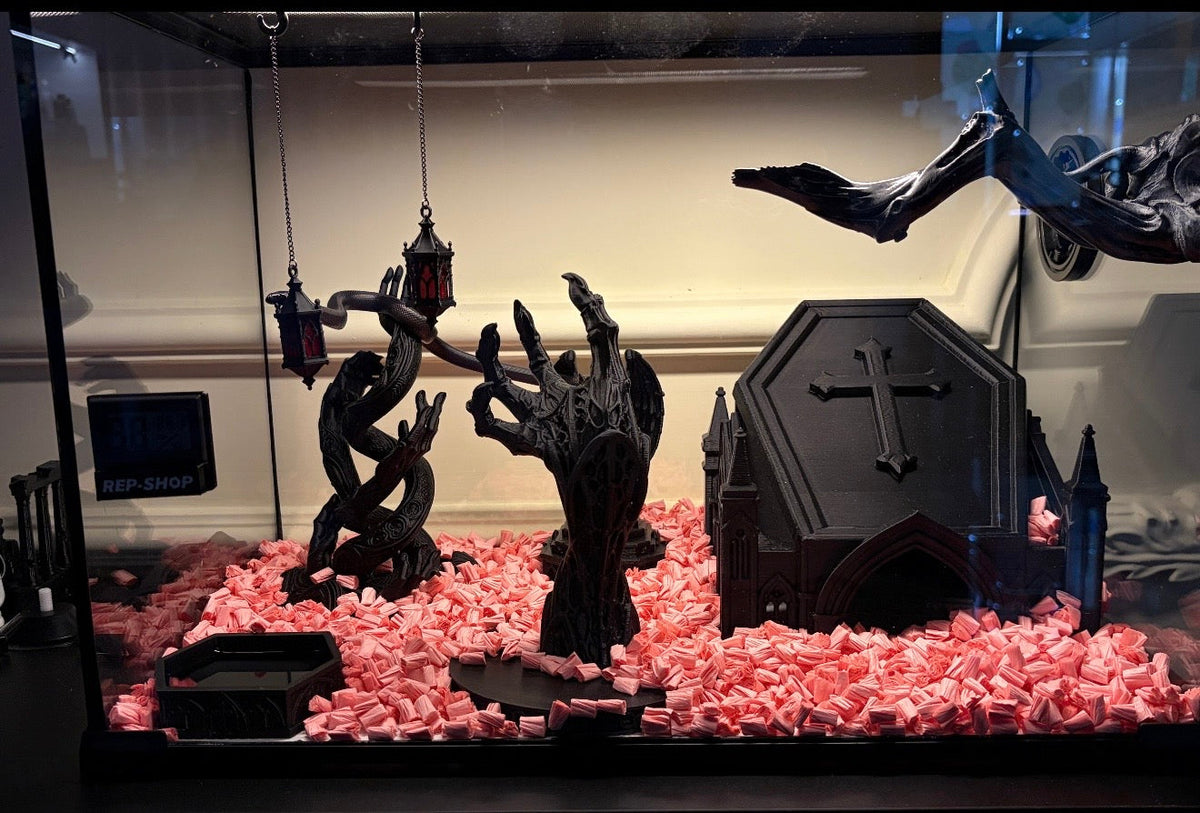
For example, a Gothic Demon Hand Climbing Stand or Gothic Tree Climbing Stand can act as both a visual feature and a way to introduce additional structure into the habitat.
Always consider the size, behavior, and climbing ability of your animal when deciding where and how to position elevated décor.
3. Create Intentional Hiding Areas
Hideouts are one of the easiest ways to combine function with design.
Rather than treating a hide as something that needs to disappear into the background, it can become part of the visual story of the enclosure.
A Gothic Crown Hideout can create the feeling of a ruined fantasy kingdom. A Gothic Fireplace Hideout can make the habitat feel like a miniature abandoned room. A Medusa Sanctuary Hideout can become the centerpiece of a darker mythological setup.
The important part is choosing appropriately sized hides and ensuring that your animal can enter, exit, and use them comfortably.
A beautiful habitat should still work for the animal first.
4. Choose Between Black and White Gothic Décor
Gothic does not have to mean an entirely black enclosure.
Black décor creates a darker, more dramatic appearance and works especially well with natural wood tones, stone textures, bark substrate, and deep green plants.
White gothic décor creates a very different atmosphere. Architectural details become easier to see, and the enclosure can feel more like ancient ruins, fantasy architecture, or a mysterious stone sanctuary.
You can also combine black and white selectively, although keeping one dominant color usually creates a more intentional result.
Think about the background, substrate, lighting, and other materials in your terrarium before choosing your main color direction.
5. Mix Gothic Pieces With Natural Materials
One of the easiest mistakes when building a themed terrarium is making every object match the theme too literally.
A gothic habitat can become much more convincing when fantasy décor is mixed with natural textures.
Depending on the species and enclosure requirements, you might combine themed pieces with appropriate materials such as:
• Bark or wood textures
• Natural-looking branches
• Stones
• Leaf litter
• Moss
• Live or artificial plants suitable for the setup
• Neutral or earthy substrate
The contrast between natural elements and sculptural gothic pieces helps the enclosure feel like an environment rather than a collection of decorations.
Imagine an old gothic structure slowly being reclaimed by nature—that is often more visually interesting than simply filling the enclosure with black objects.
6. Build Around a Small Color Palette
You do not need many colors to create a memorable terrarium.
For a dark fantasy setup, consider a palette such as:
Black + deep green + brown
For a lighter fantasy ruin:
White + stone gray + green
For a more dramatic gothic enclosure:
Black + white + dark natural wood
Keeping the palette controlled helps individual pieces feel like they belong in the same world.
Small accents can then provide contrast without making the habitat visually chaotic.
7. Leave Some Empty Space
More décor does not automatically create a better habitat.
Negative space is important both visually and functionally. It allows individual pieces to stand out and helps prevent the enclosure from feeling cluttered.
Before adding another decoration, ask whether it creates something useful—a hide, climbing opportunity, visual barrier, or meaningful part of the environment—or whether it is simply filling an empty area.
Sometimes removing one piece makes the entire setup look better.
8. Design for Your Animal First
The visual theme should always come after the animal's actual husbandry requirements.
Different reptiles and exotic pets can require very different temperatures, humidity levels, enclosure dimensions, ventilation, substrates, lighting, hiding opportunities, and climbing structures.
A decoration that works well for one species may not be appropriate for another.
Before adding any décor, consider:
• The animal's adult size
• Required temperature and humidity
• Whether the species climbs or spends most of its time on the ground
• Appropriate hiding spaces
• Safe access and movement
• Stability of climbing structures
• Cleaning and maintenance
• Space required for essential husbandry equipment
Decor should complement a properly designed habitat—not replace proper husbandry.
Build a Dark Little World of Your Own
The most interesting reptile enclosures often feel like places rather than containers.
A gothic terrarium might resemble an abandoned castle, a forgotten sanctuary, an overgrown fantasy ruin, or a tiny mysterious world hidden behind glass.
You do not need to redesign everything at once. Start with one focal piece, establish a color palette, add appropriate natural textures, and build the habitat gradually around the needs of your animal.
MODBOX creates habitat décor and themed pieces for reptile and exotic-pet keepers who want their enclosures to feel like worlds of their own.
Explore our Gothic Reptile Terrarium & Dark Habitat Décor collection to find hideouts, climbing structures, and fantasy-inspired pieces for your next setup.
Build Better Worlds.

Written by mod box