Article: 7 Reptile Enclosure Décor Ideas to Create a Better-Looking Habitat
7 Reptile Enclosure Décor Ideas to Create a Better-Looking Habitat
A reptile enclosure doesn't have to feel like a plain glass box.
With the right combination of backgrounds, hides, climbing elements, textures, and décor, even a simple enclosure can become a habitat that feels much more intentional and visually interesting.
Whether you're setting up a home for a gecko, bearded dragon, or another small exotic pet, here are seven reptile enclosure décor ideas to inspire your next setup.
1. Start With a Background
One of the easiest ways to completely change the appearance of an enclosure is to work with the back wall.
Instead of leaving the enclosure looking empty, a decorative or 3D-style background can create visual depth and give the habitat a more finished appearance.
Depending on the look you're going for, you might choose:
- Rocky textures for a desert-inspired habitat
- Bark and forest textures for a tropical setup
- Neutral natural textures for a minimalist enclosure
- Decorative backgrounds for a more imaginative theme
A background can also help establish the overall style of the habitat before you begin adding smaller pieces.
2. Use Vertical Space
Don't only decorate the floor.
Many enclosures have a surprising amount of unused vertical space that can be incorporated into the design.
Branches, ledges, elevated hides, climbing structures, and wall-mounted décor can help create different levels throughout the enclosure.
This is especially useful when designing habitats for species that naturally make use of elevated areas.
The result can also make the enclosure feel much larger and more dimensional than a setup where everything sits at ground level.
3. Make Hides Part of the Design
Hides are functional, but that doesn't mean they have to look like an afterthought.
Try incorporating hides that fit the visual theme of the enclosure.
For example, a desert habitat might use rock-inspired caves, while a forest habitat could incorporate darker natural textures.
You can also position plants, branches, or other décor around hides to help them blend into the overall setup.
The goal is to make functional habitat elements feel like part of the design rather than separate pieces placed inside a tank.
4. Mix Different Shapes and Textures
One of the reasons some reptile enclosures look flat is that everything inside has a similar shape, height, or texture.
Adding variety can make the habitat much more visually interesting.
Try combining elements such as:
- Smooth surfaces
- Rock-like textures
- Wood-inspired pieces
- Plants
- Rounded hides
- Elevated structures
- Different heights and shapes
You don't necessarily need more décor. Sometimes simply creating more contrast between the pieces you already use can make a big difference.
5. Build Around a Habitat Theme
This is where reptile enclosure design gets really fun.
Instead of choosing individual decorations first, choose a theme and build the habitat around it.
Here are four ideas:
Rainforest 🌿
Think greenery, climbing structures, natural textures, leaves, branches, and darker earthy details.
Desert 🏜️
Use warm tones, rock-inspired hides, open areas, desert textures, and simple structural pieces.
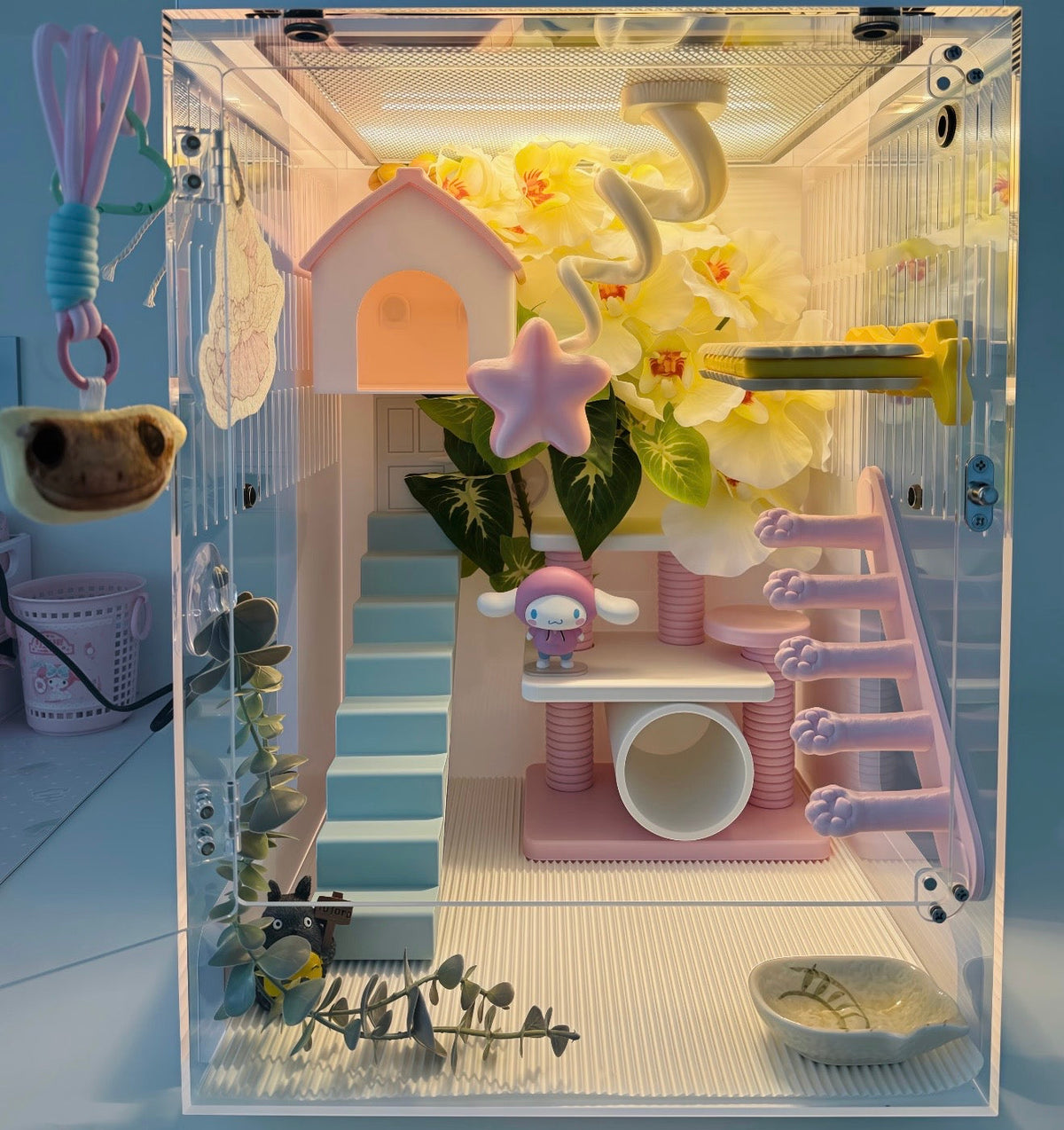
Moon 🌙
A more playful enclosure can use soft colors, unusual shapes, stars, moons, clouds, and imaginative climbing décor.
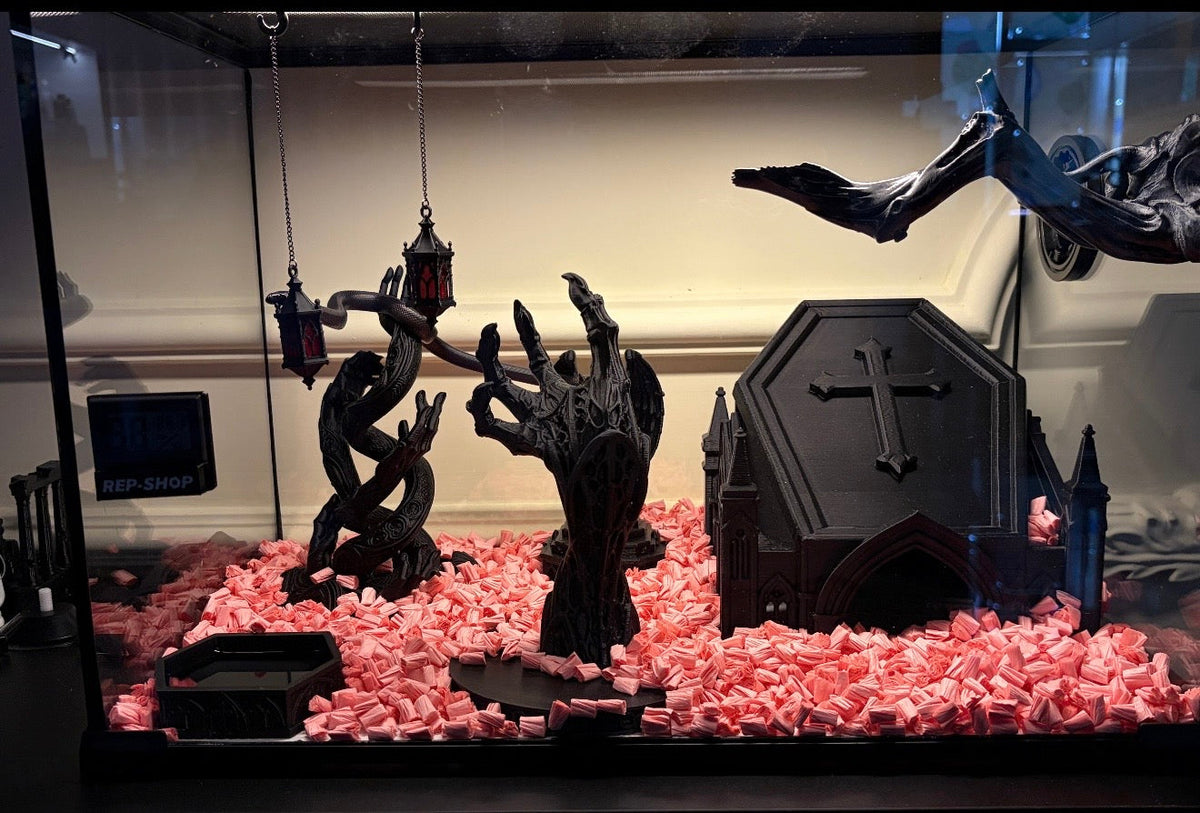
Gothic 🖤
Dark hides, dramatic architecture-inspired pieces, unusual textures, and darker decorative elements can create an enclosure that feels completely different from a traditional habitat.
There is no rule saying every reptile enclosure has to look the same.
A theme gives you a starting point while still leaving plenty of room to make the setup your own.
6. Create a Focal Point
Just like decorating a room, a habitat often looks better when there is one main area that draws your attention.
That could be:
- A large hide
- An interesting branch
- A climbing wall
- A decorative background
- A unique centerpiece
Then build the rest of the enclosure around that element.
This can help prevent the habitat from looking cluttered while still allowing you to include several different pieces.
7. Keep the Animal's Needs at the Center of the Setup
A beautiful enclosure still needs to work for the animal living inside it.
Décor should never replace proper husbandry.
Before adding a piece to an enclosure, consider the needs of the specific species, including appropriate enclosure size, temperature, humidity, lighting, ventilation, accessibility, and safe placement of décor.
Make sure pieces are stable and appropriately sized, and avoid creating areas where an animal could become trapped or injured.
When in doubt, research the husbandry requirements for your specific species before designing the habitat around it.
Your Habitat Doesn't Have to Look Like Everyone Else's
Creating a reptile enclosure is part husbandry and part creativity.
You can build something natural, colorful, minimal, dark, whimsical, or completely different.
The best setups bring together the needs of the animal and the personality of the keeper.
At MODBOX, we're exploring habitat décor designed to help reptile and exotic-pet keepers create enclosures with more personality — from natural-inspired setups to imaginative habitat worlds.
Explore MODBOX habitat décor and start building a world of your own.

Written by mod box