7 Reptile Enclosure Ideas to Create a More Enriching Habitat
2. Content
Introduction
A reptile enclosure can be more than a place for the essentials. With a thoughtful layout, even a compact habitat can offer more opportunities to climb, hide, rest and explore — while becoming a space that looks great in your home.
The best enclosure ideas start with the animal, not the decoration. Different species have different needs, so temperature, humidity, lighting, substrate and safe access to food and water should always come first. Once those basics are covered, the layout and décor can help make the habitat more functional, engaging and visually interesting.
Here are seven ideas to inspire your next reptile enclosure setup.
1. Make Better Use of Vertical Space
The floor isn't the only usable part of an enclosure.
For species that naturally make use of elevated areas, adding platforms, climbing structures, branches or other appropriate features can create additional usable space without requiring a larger enclosure.
Instead of placing everything at ground level, think in layers. A well-planned habitat can provide different areas for climbing, resting and exploring at different heights.
Always make sure elevated pieces are secure and appropriate for the species you're keeping.
2. Create More Than One Place to Hide
Hideouts are an important part of many reptile habitats, but they don't all have to look the same.
Depending on the animal's husbandry requirements, you can integrate hiding areas into different parts of the enclosure while using shapes and textures that complement the overall design.
A hide can become part of the landscape rather than something that feels added as an afterthought.
3. Build Around a Theme
A functional enclosure doesn't have to look purely utilitarian.
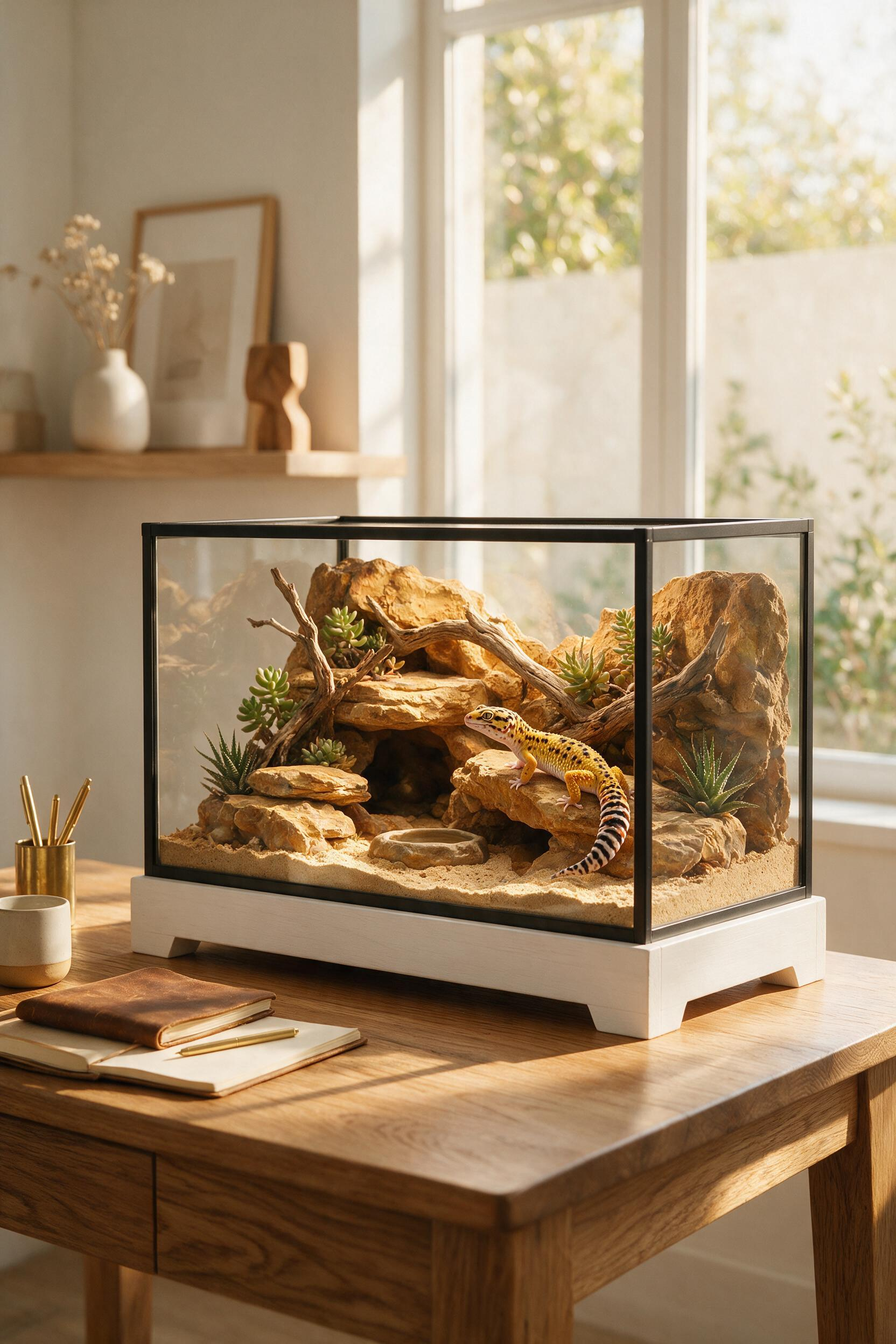
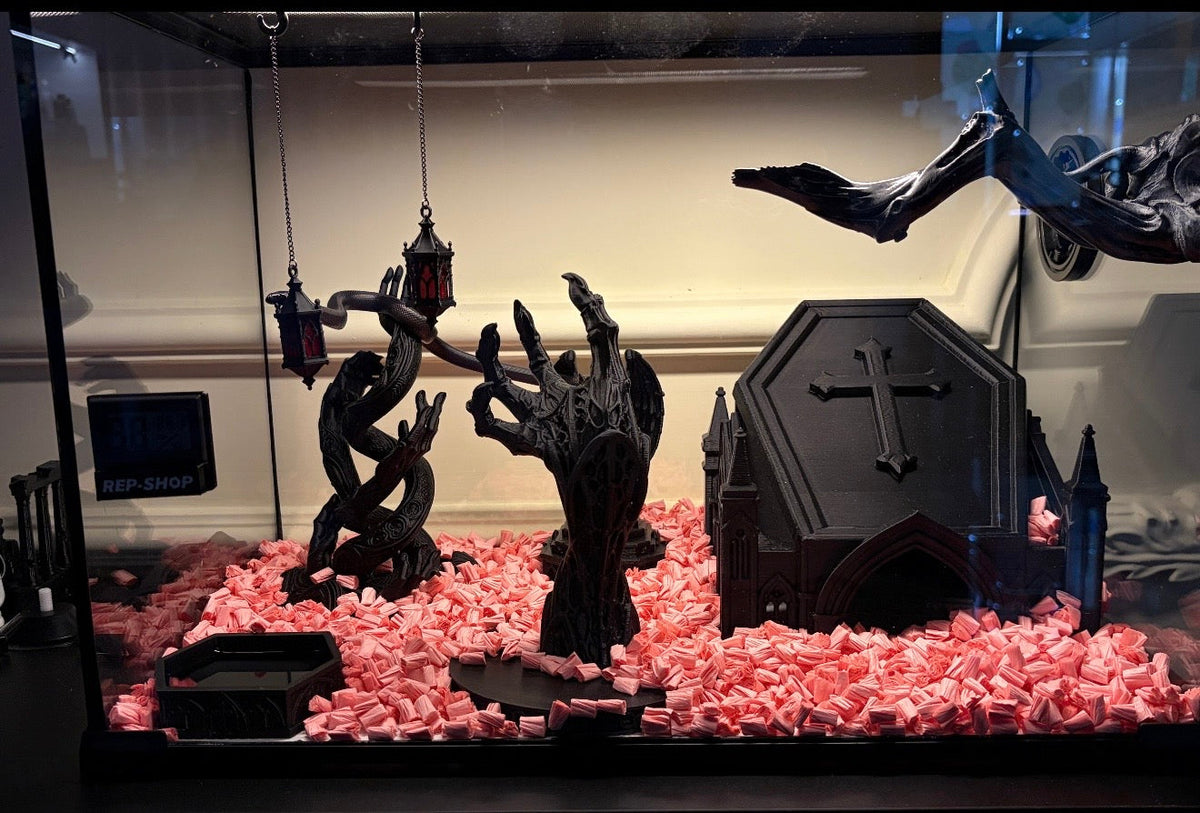
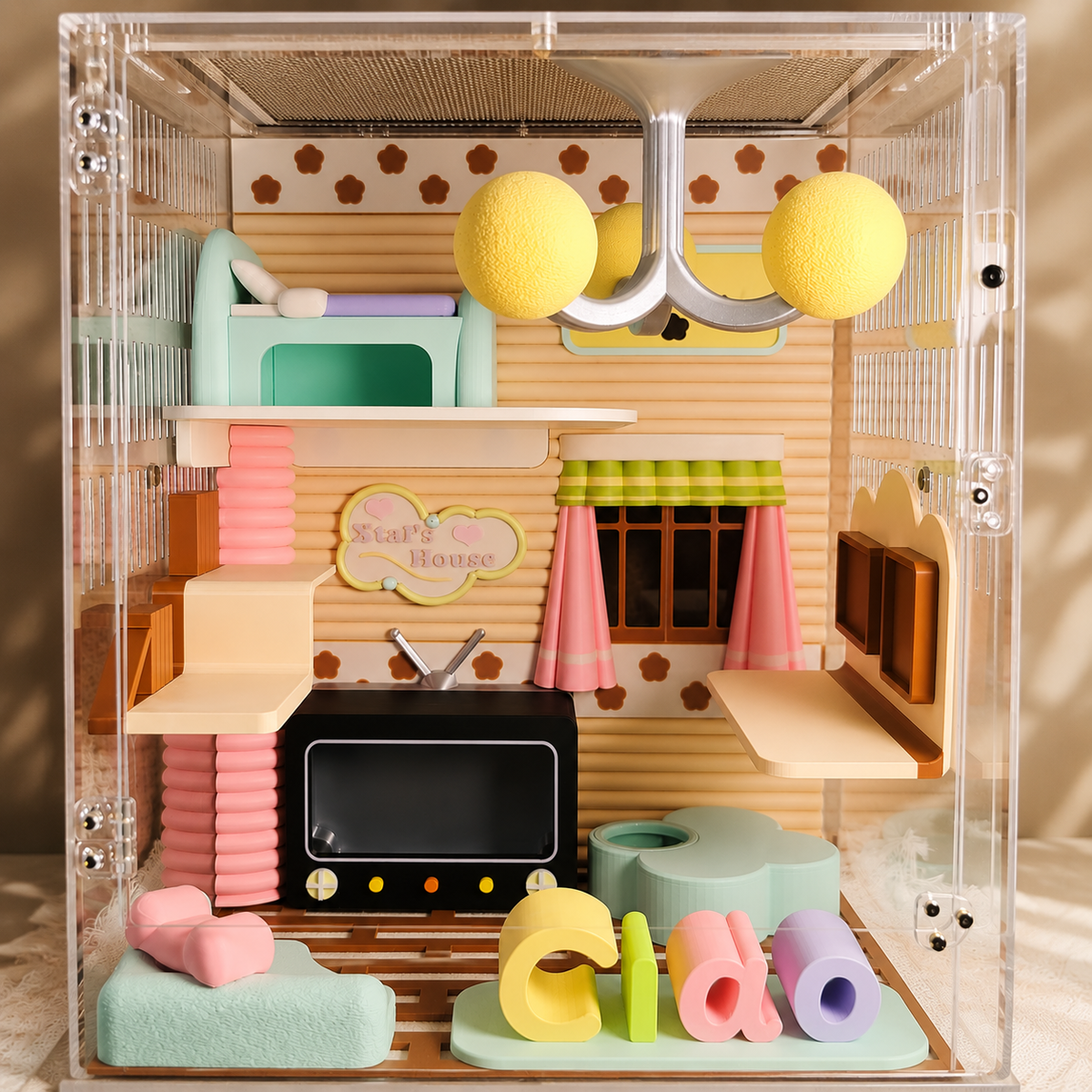
Try building the habitat around a visual idea: a miniature loft, a dreamy moon world, a colorful amusement park, a natural forest or something completely your own.
A consistent theme can make separate climbing structures, platforms, hides and accessories feel like one environment instead of a collection of unrelated pieces.
This is the idea behind MODBOX's miniature habitat worlds: combining functional enclosure features with a distinct visual identity.
4. Add Different Levels and Routes
Think about how an animal can move through the enclosure.
Rather than creating one obvious path, consider using appropriately positioned platforms, ramps, climbing elements and resting areas to create multiple routes through the habitat.
Even a relatively small enclosure can feel more complex when the interior isn't limited to one flat surface.
The goal isn't to fill every empty space. Leave enough room for comfortable movement and make sure every feature is stable and accessible.
5. Make Functional Accessories Part of the Design
Water bowls, hides and other essentials don't necessarily have to interrupt the look of an enclosure.
Choose accessories that work with the habitat's overall style and arrange them intentionally. A water area can become part of a themed corner. A hideout can double as a visual focal point. A climbing feature can add both usable space and personality.
Small details can make a surprisingly big difference to the finished setup.
6. Leave Room for the Habitat to Evolve
You don't need to complete an enclosure all at once.
A modular approach makes it easier to change individual pieces, experiment with layouts or refresh the appearance without rebuilding the entire habitat.
Start with the essentials and a few key structures. Over time, you can adjust the setup based on how the space is being used and what works best for your animal.
This also makes it easier to create a habitat that feels personal rather than copying a finished setup exactly.
7. Design for Your Animal First
The most attractive enclosure isn't necessarily the best enclosure.
Before choosing décor, consider the specific animal you're keeping: its adult size, natural behavior, activity patterns and husbandry requirements. An enclosure designed for a terrestrial species may need a very different layout from one designed for a species that regularly climbs.
Decorative elements should complement proper husbandry — never replace it.
When those fundamentals come first, the creative part becomes much more interesting. You can build something that works for the animal while still creating a miniature world with its own personality.
Build a Habitat That Feels Like a Tiny World
There isn't one perfect way to design a reptile enclosure.
Some people prefer naturalistic habitats. Others love colorful, playful interiors or miniature spaces inspired by rooms, landscapes and imaginary worlds.
Whichever direction you choose, start with your animal's needs, use the available space thoughtfully, and let the design develop around it.
Explore MODBOX habitat décor, climbing pieces, hideouts and themed enclosure ideas to find inspiration for your next tiny world.

Written by mod box