How to Build a Beautiful Rainforest Terrarium: A Step-by-Step Guide
Introduction
A rainforest terrarium can transform a simple enclosure into a layered miniature world filled with climbing routes, hiding places, plants, and natural-looking textures.
However, a beautiful habitat should offer more than visual appeal. It should also provide usable space, secure resting areas, suitable ventilation, and environmental conditions that match the animal living inside it.
This step-by-step guide explains how to plan and arrange a rainforest-inspired terrarium for small reptiles and invertebrates. Before introducing any animal, always research the specific temperature, humidity, lighting, space, and safety requirements of that species.
1. Choose the Right Enclosure
The enclosure determines how much usable space you have and what kind of layout you can create.
For climbing species, a taller enclosure usually provides more opportunities to add branches, vines, ledges, and elevated resting areas. Ground-dwelling animals generally benefit from more horizontal floor space instead.
When selecting an enclosure, consider:
- The adult size of the animal
- Whether the species is arboreal or terrestrial
- Ventilation requirements
- Space for heating or lighting equipment
- Room for hides, feeding areas, and climbing structures
- Ease of cleaning and everyday maintenance
Avoid choosing an enclosure based only on appearance. A beautiful setup cannot compensate for insufficient space or unsuitable ventilation.
2. Plan the Layout Before Adding Decorations
Before placing anything inside the enclosure, decide where the main functional areas will be.
A balanced rainforest habitat often includes:
- An open viewing area
- One or more secure hiding places
- Climbing paths at different heights
- A feeding or water area
- Dense visual cover
- Enough open space for comfortable movement
Start with the largest pieces first, such as climbing branches, hides, and major decorative elements. Smaller plants and details can be added later.
Planning first helps prevent overcrowding and makes the final habitat look more intentional.
3. Select a Species-Appropriate Substrate
Substrate is not only a decorative layer. It can affect humidity, cleanliness, burrowing behavior, drainage, and overall habitat safety.
Different animals require different substrates, so there is no single option that works for every rainforest species.
Depending on the animal, suitable choices may include:
- Reptile-safe soil mixtures
- Coconut-based substrate
- Moss used in specific areas
- Paper-based temporary substrates
- A drainage layer for planted setups
Avoid selecting substrate based only on how natural it looks. Some loose materials may be unsuitable for certain animals, especially when accidentally swallowed during feeding.
MODBOX habitat kits do not include substrate, allowing keepers to choose an option that matches the needs of their specific pet.
4. Build a Strong Climbing Structure
Climbing structures make vertical space useful and can encourage natural movement and exploration.
Use branches, vines, ledges, or climbing pieces to create multiple routes through the enclosure. Rather than placing one decoration in the center, try connecting different levels so the animal can move from the floor to the upper areas without large gaps.
A good climbing layout should be:
- Securely positioned
- Stable under the animal’s weight
- Free from sharp edges
- Easy to access
- Arranged at more than one height
Test every piece before introducing an animal. Decorations should not shift, roll, or collapse when gently pressed.
5. Add Safe Hiding Places
Even visually open rainforest habitats need secure areas where the animal can retreat.
Hides help provide privacy and may reduce stress. Depending on the species, hiding places can be positioned at ground level, behind plants, beneath climbing structures, or higher in the enclosure.
Try to avoid making the entire habitat exposed from every angle. Layering plants and decorations can create visual barriers without making the enclosure feel crowded.
The goal is to give the animal choices:
- A more open resting area
- A covered resting area
- A lower hiding area
- An elevated hiding area, when appropriate
The exact number and position of hides should be based on the species being kept.
6. Use Plants to Create Depth and Visual Cover
Plants are one of the easiest ways to create a rainforest atmosphere.
Artificial plants are practical for decorative habitats because they are easy to arrange, simple to clean, and do not require plant lighting or watering. Live plants can create a more natural environment, but they require suitable drainage, lighting, soil, and long-term maintenance.
When arranging plants:
- Place taller foliage toward the back
- Use smaller plants near the front
- Leave some open viewing space
- Cover empty corners
- Add foliage near hides and climbing routes
- Avoid blocking ventilation openings
Layering plants at different heights creates more depth than placing all the greenery at the same level.
Always check that artificial plants contain no exposed wire, sharp plastic, loose pieces, or materials that could be unsafe for the animal.
7. Add Natural-Looking Details
After the main functional layout is complete, smaller decorative details can help unify the habitat.
Useful visual elements may include:
- Artificial moss
- Natural-looking rocks
- Resin decorations
- Leaf litter, when appropriate
- Textured feeding bowls
- Small themed accents
These pieces should support the overall design rather than overwhelm it.
A common mistake is continuing to add decorations because empty space feels unfinished. In reality, open space is important. It gives the animal room to move and allows the main features to stand out.
A well-designed habitat should feel layered, not cluttered.
8. Set Up Lighting, Temperature, and Humidity
A rainforest appearance does not automatically mean the enclosure has suitable environmental conditions.
Temperature, humidity, UVB, lighting schedules, and ventilation requirements vary significantly between species. Some animals need consistently higher humidity, while others need regular drying periods and strong airflow.
Use reliable equipment such as:
- A digital thermometer
- A digital hygrometer
- Species-appropriate heating equipment
- Timers for lighting
- Thermostatic controls where heating is used
Do not rely only on how the enclosure feels to you.
Before adding an animal, confirm the correct environmental range using reliable species-specific care information. Monitor the enclosure for several days to make sure the conditions remain stable.
9. Keep Feeding and Water Areas Accessible
Feeding and water areas should be easy for both the animal and the keeper to access.
Avoid placing bowls beneath unstable decorations or in areas that are difficult to clean. For some climbing animals, elevated feeding stations may be more suitable than bowls placed on the floor.
When arranging this area, consider:
- How easily the animal can reach it
- Whether food can escape or become hidden
- Whether the bowl can tip over
- How often the area needs cleaning
- Whether nearby substrate could enter the bowl
A functional feeding area can still match the overall rainforest theme by using natural-looking bowls or integrating it into the layout.
10. Test the Habitat Before Introducing an Animal
Once the setup is complete, do not immediately place the animal inside.
First, inspect the habitat carefully.
Check that:
- All decorations are stable
- No sharp edges are exposed
- Doors and ventilation areas are unobstructed
- Heating equipment is properly controlled
- Temperature and humidity are stable
- The animal cannot become trapped behind decorations
- Water and feeding areas are accessible
- Cleaning can be performed without dismantling the entire setup
Running the enclosure for several days gives you time to identify problems before the animal moves in.
Common Rainforest Terrarium Mistakes
Overcrowding the enclosure
More decorations do not always create a better habitat. Too many pieces can reduce movement space and make cleaning difficult.
Choosing appearance over animal needs
A habitat should be designed around the species first. Visual style comes second.
Using unstable climbing pieces
Branches and decorations that shift can injure or frighten an animal.
Blocking ventilation
Plants and backgrounds should not prevent proper airflow.
Assuming every tropical species needs identical humidity
Rainforest animals do not all require the same conditions. Research the exact species rather than following a generic tropical setup.
Using unsuitable plants or materials
Check live plants, artificial foliage, adhesives, paints, and decorative materials before placing them inside an enclosure.
Which Animals Can Use a Rainforest-Style Habitat?
Depending on enclosure size and environmental setup, rainforest-inspired habitats may be considered for certain small:
- Arboreal geckos
- Jumping spiders
- Mantises
- Tropical invertebrates
- Other small exotic pets
This is only a general design suggestion, not a universal compatibility list.
The enclosure dimensions, ventilation, humidity, temperature, adult animal size, and species-specific care requirements must always be checked before choosing a habitat.
For more general enclosure inspiration, read 10 Beautiful Exotic Pet Habitat Ideas for Small Reptiles and Invertebrates.
For additional layout guidance, visit How to Create the Perfect Gecko Habitat: A Complete Beginner’s Guide.
A Simpler Way to Build a Coordinated Rainforest Habitat
Creating a complete habitat from individually selected pieces can take time. Each branch, hide, plant, bowl, and decorative element must work together both visually and functionally.
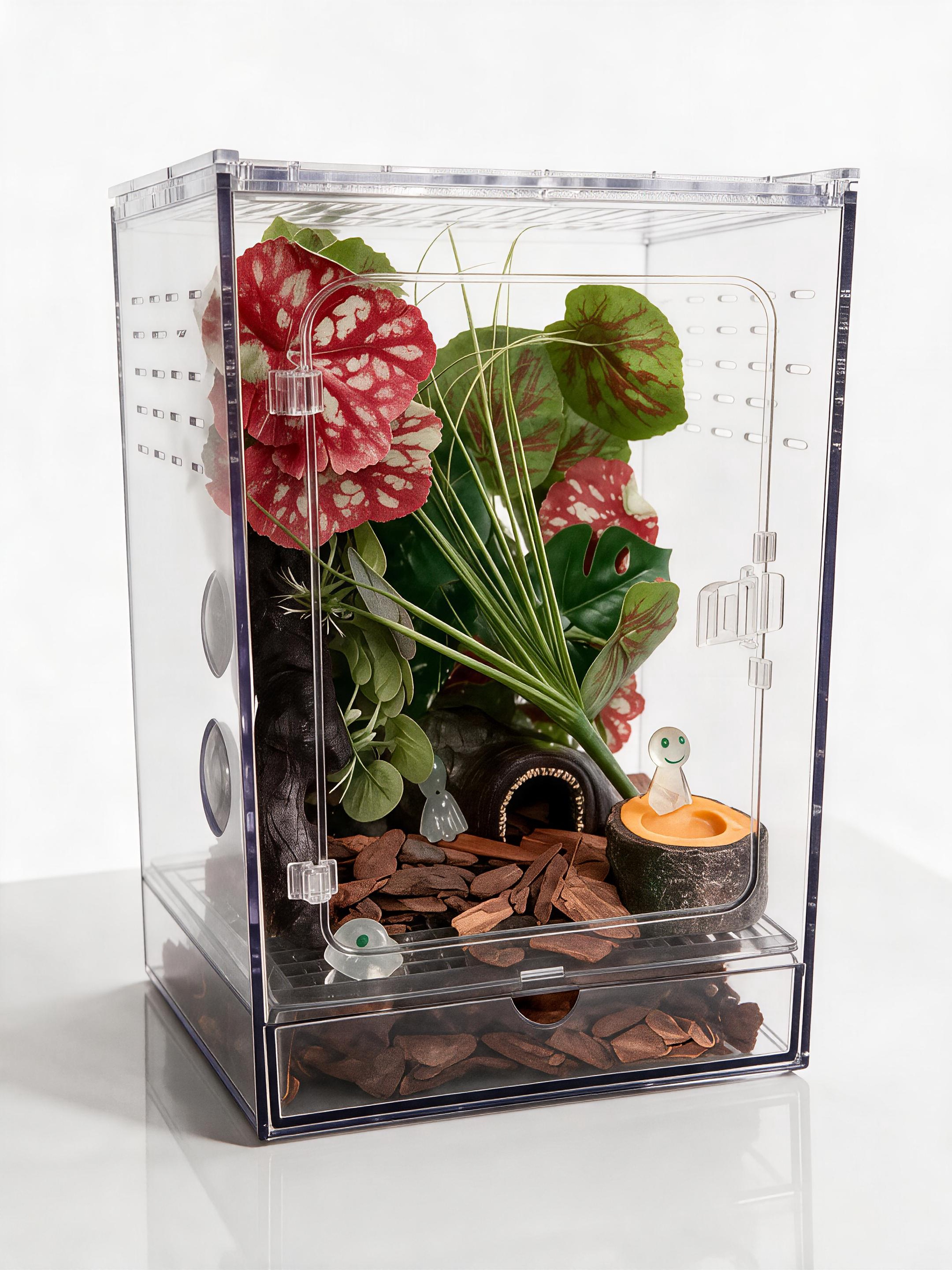
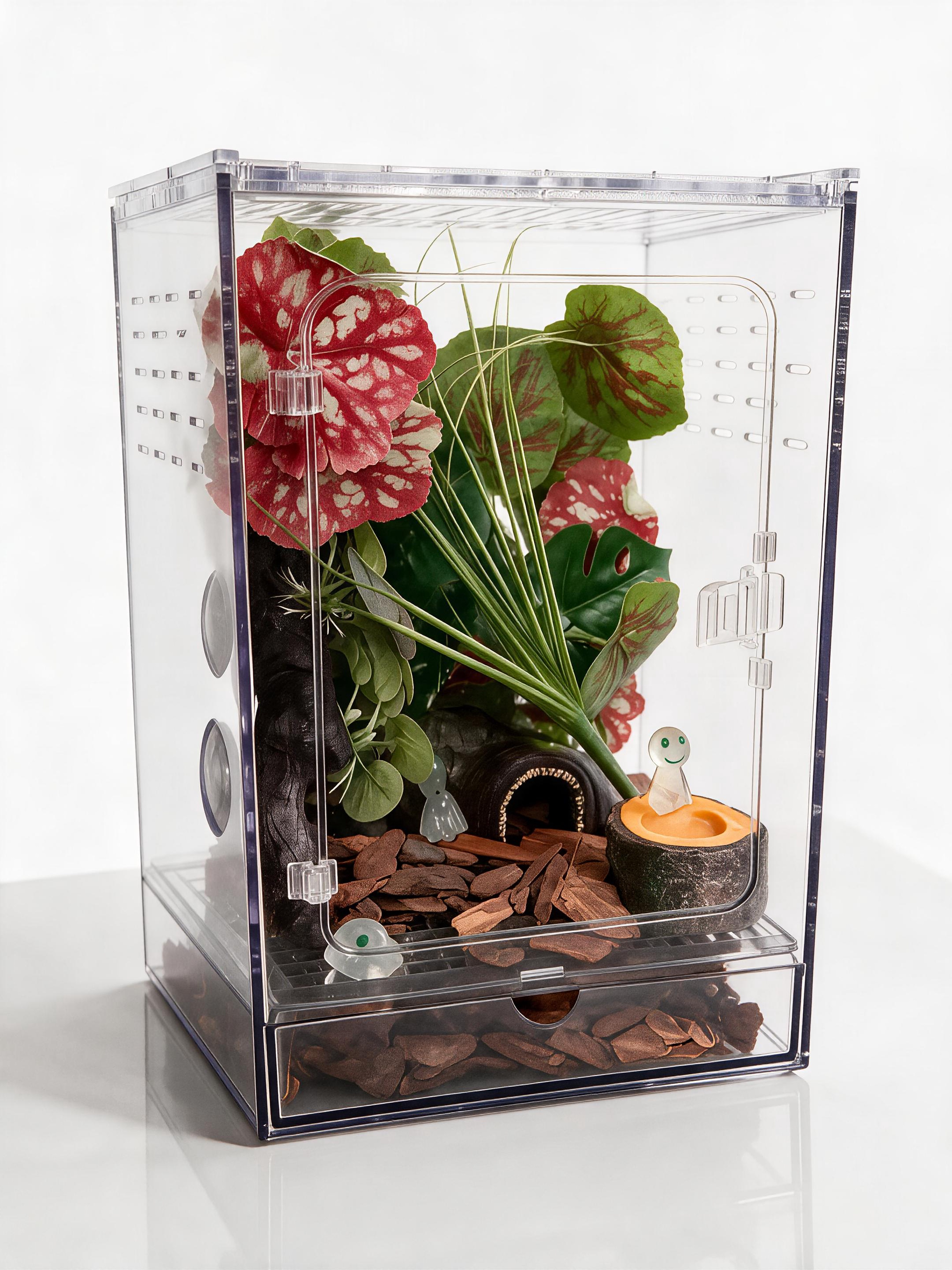
The MODBOX Rainforest Habitat Kit combines a tall enclosure with coordinated rainforest-inspired accessories, including climbing, hiding, feeding, and decorative elements.
It is designed to provide a simple starting point for keepers who want a more cohesive setup without selecting every component separately.
Substrate, environmental equipment, and the animal are not included. Always adapt the final setup to the needs of your specific species.
Frequently Asked Questions
Does a rainforest terrarium need live plants?
No. A rainforest-style habitat can use artificial plants, live plants, or a combination of both. Artificial plants are easier to maintain, while live plants require appropriate lighting, drainage, and care.
Is a rainforest terrarium suitable for every gecko?
No. Gecko species have different enclosure, humidity, temperature, lighting, and space requirements. Research the specific species before building the habitat.
How often should a rainforest terrarium be cleaned?
Spot-cleaning should be performed whenever waste, spoiled food, or dirty water is found. The frequency of deeper cleaning depends on the animal, substrate, enclosure type, and whether the habitat is decorative or bioactive.
Should the entire enclosure be filled with plants?
No. Plants should provide cover and visual depth while leaving enough open space for movement, feeding, observation, and maintenance.
Is substrate included in MODBOX habitat kits?
No. Substrate is not included because different animals require different substrate types.
How long does MODBOX shipping take?
MODBOX offers free shipping within the United States. Estimated delivery is generally 8–13 business days.
Conclusion
A beautiful rainforest terrarium combines thoughtful design with species-appropriate care.
Start with the correct enclosure, establish safe climbing and hiding areas, create visual depth with plants, and leave enough open space for movement and maintenance. Most importantly, make every environmental decision around the needs of the animal.
At MODBOX, we believe an enclosure should be more than a container. It should become a carefully designed miniature world.
Build Better Worlds.

Written by boxmod